
Willow Cuttings
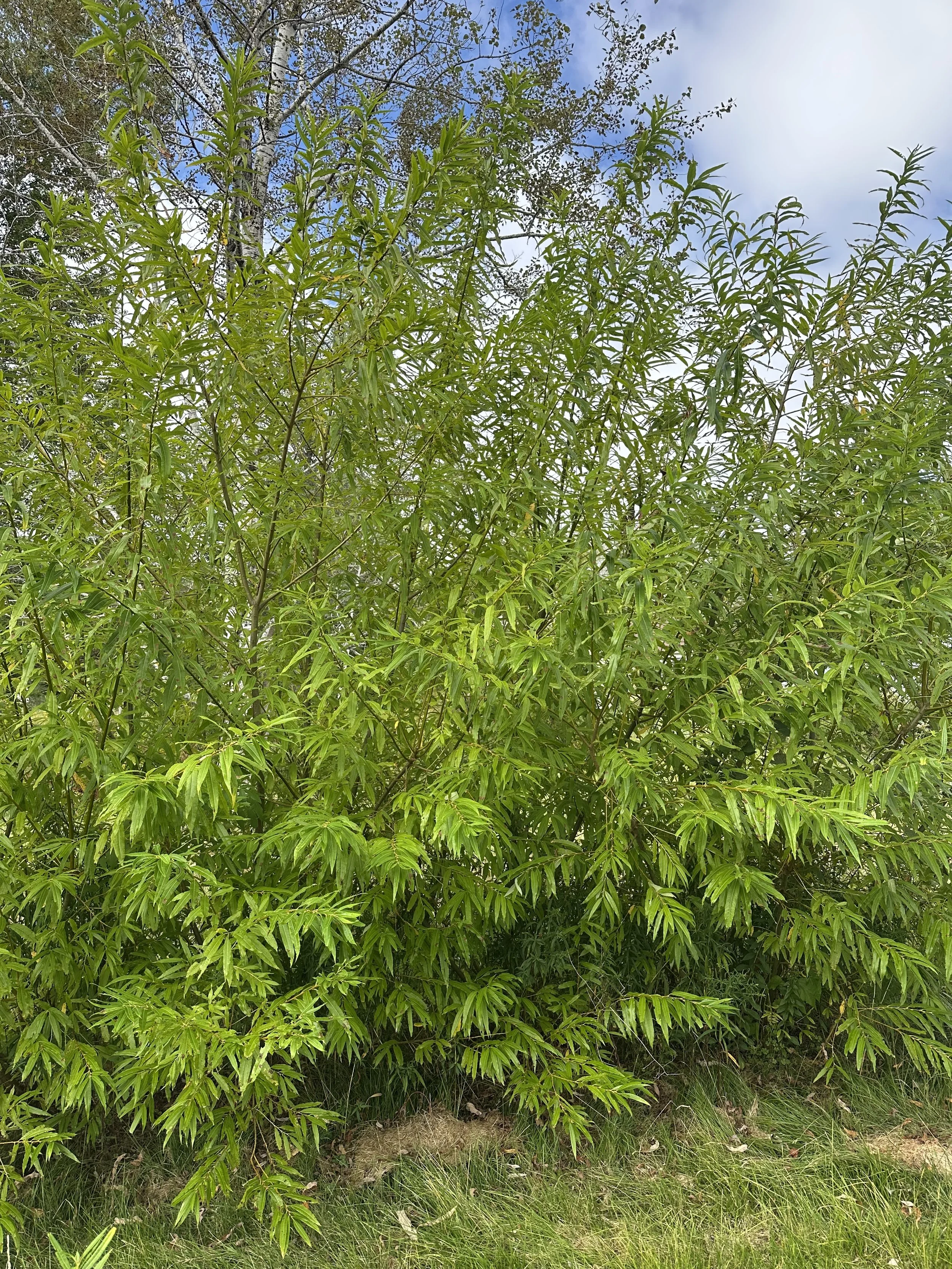
Here at Dandy Ram we love willows!! We plant them around the farm in wetter areas for fencing, hedgerows, windbreaks, and for early pollinator food. They are also a joy to design with, adding structure and texture. Willow plants are resilient and fast-growing, tolerating spots where other plants might not grow. Coppicing and pruning the plants allows repeated harvests and vigorous regrowth each year. Willow cuttings are 10”, sold in bundles of 5. Planting tips below and a care card is included with each purchase.

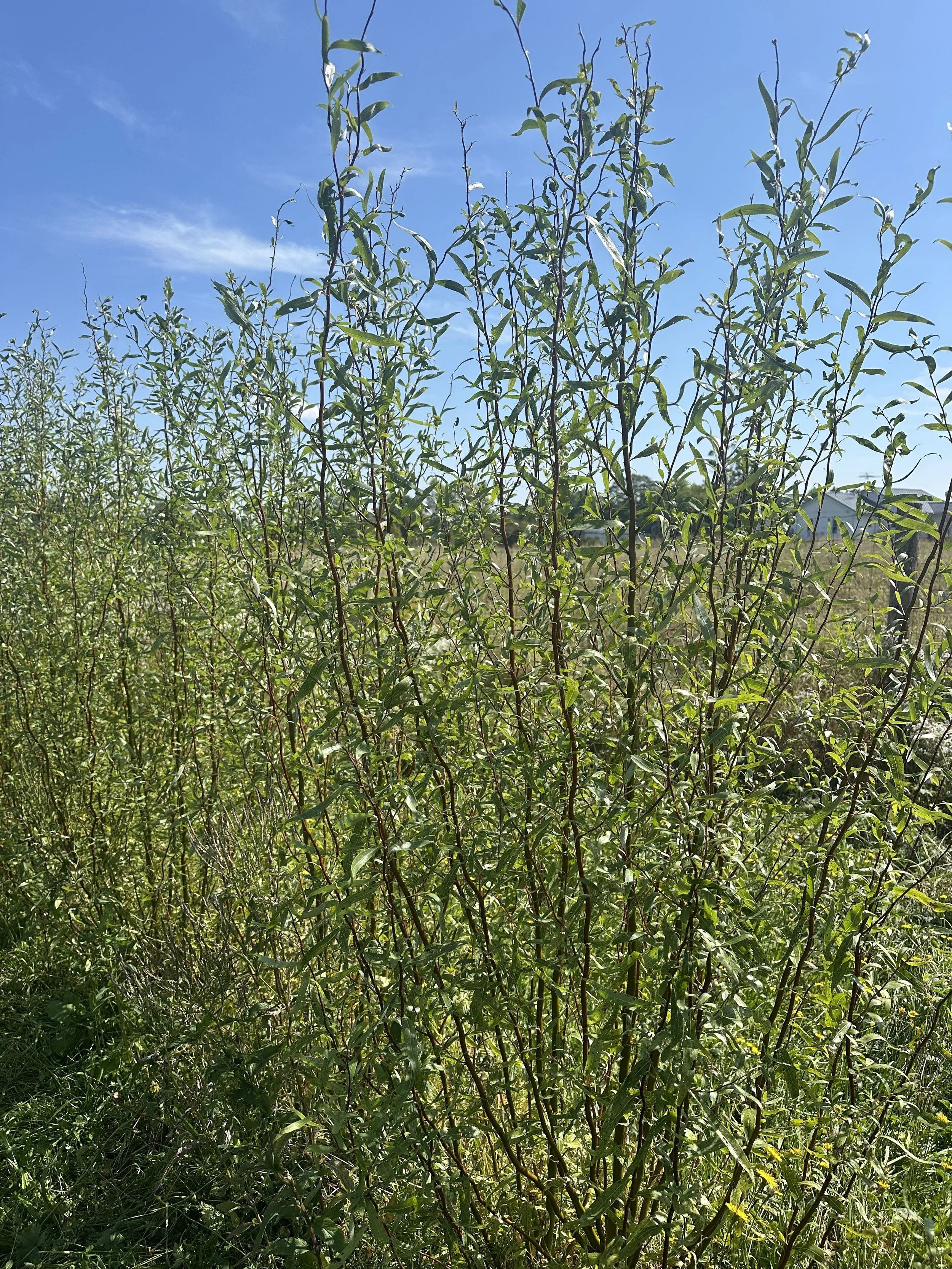
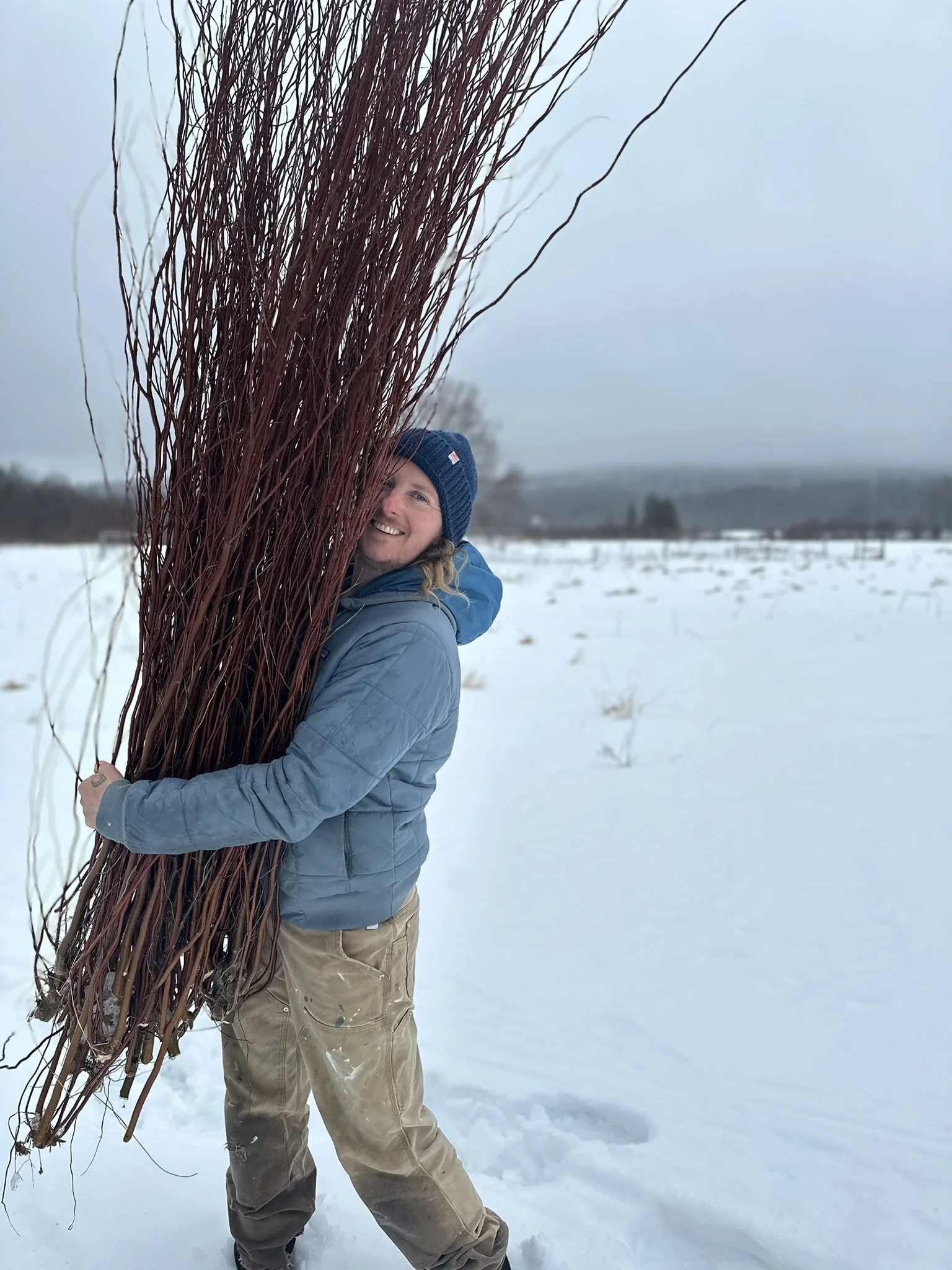
Twisty gorgeous plants! Great for design work with their funky curly stems and beautiful colored bark. Plants can be coppiced each year or left to grow into tall corkscrew trees.
Burgundy is the fastest growing of the three curly varieties we grow with a more upright growing habitat. The squiggly branches are a gorgeous color. It can grow up to 8 feet a year after being coppiced while dormant.
Super curl red is by far the most curly with a bushier habit thanks to many wicked curly branches extending out.
Prefers wet soils. May take up to 2 years to put on significant growth. Zone 3 and beyond. Sold in bundles of 5, 10” cuttings. Growing instructions come with your order.

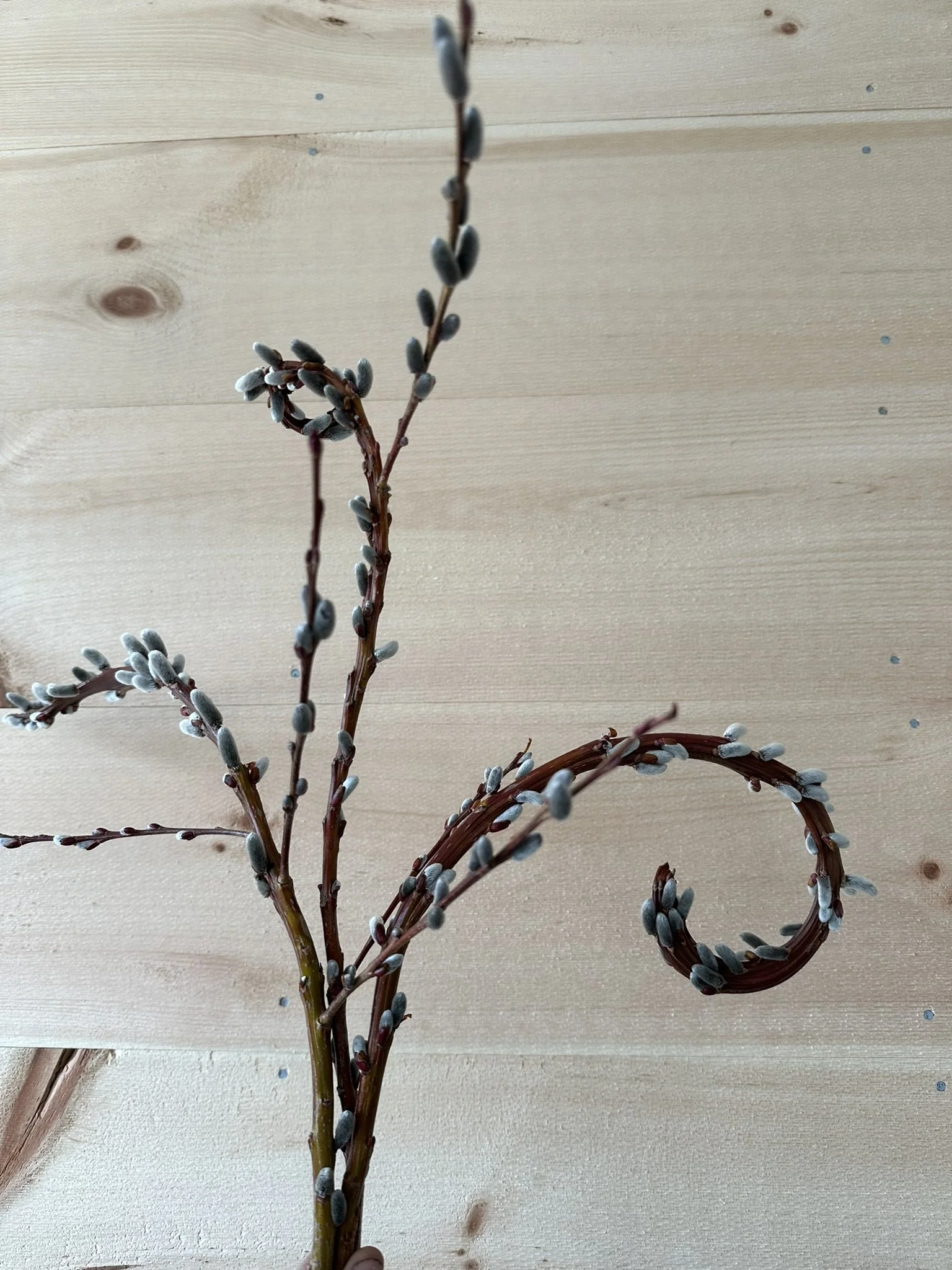
Our favorite willow choice for a fast growing fence, hedgerow, or windbreak on the farm, growing 10-15 feet tall in a few seasons. Harvest them for their beautiful long stems full of oblong catkins on reddish wood in early spring. If the plant is left to mature it will start to form the famous "fantail" stems, curly flat branches with ornamental value, though these are less frequent. Prefers wet soils. Zone 3 and beyond. Sold in bundles of 5, 10” cuttings. Growing instructions come with your order. Salix udensis “Sekka”

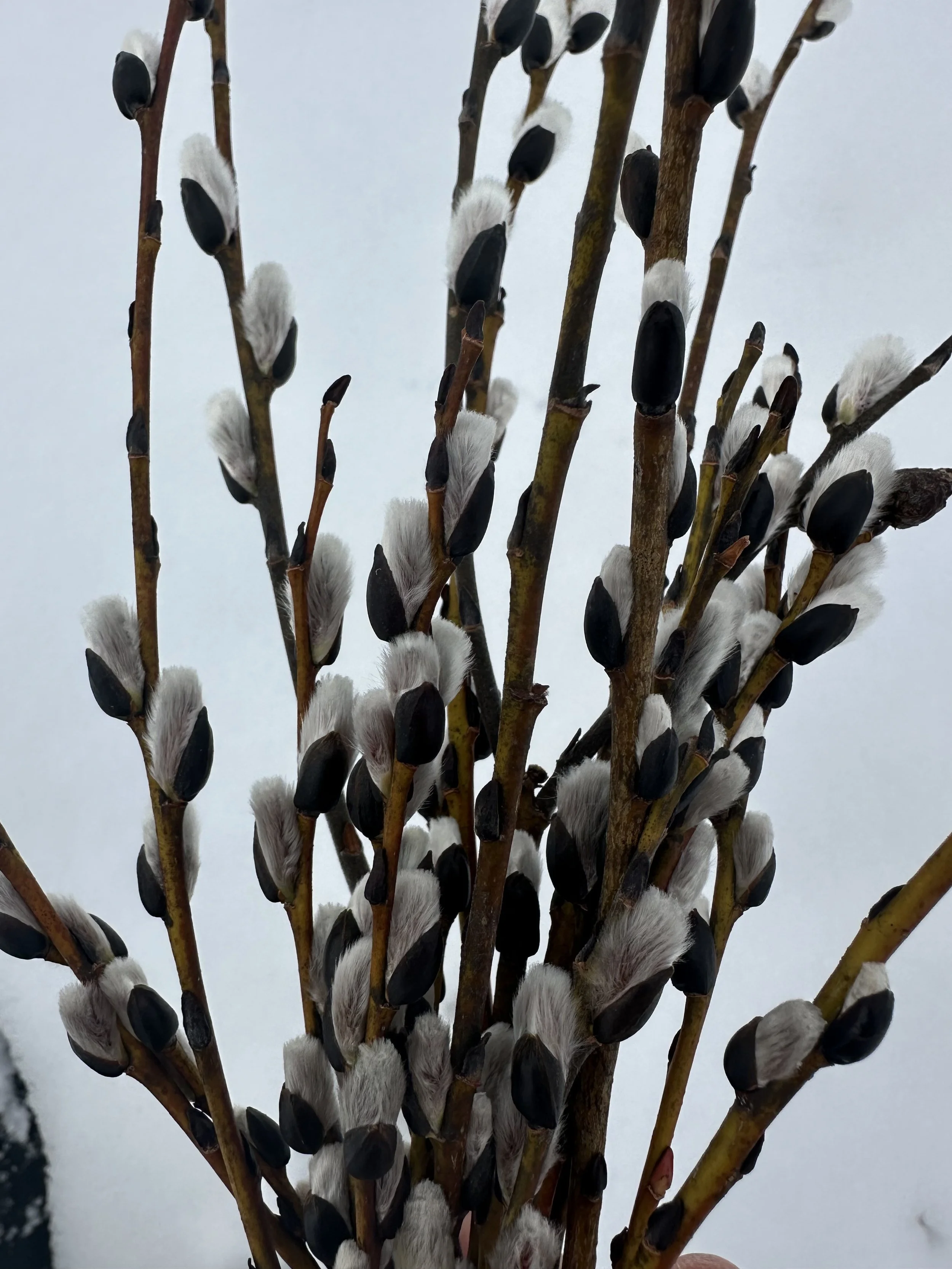
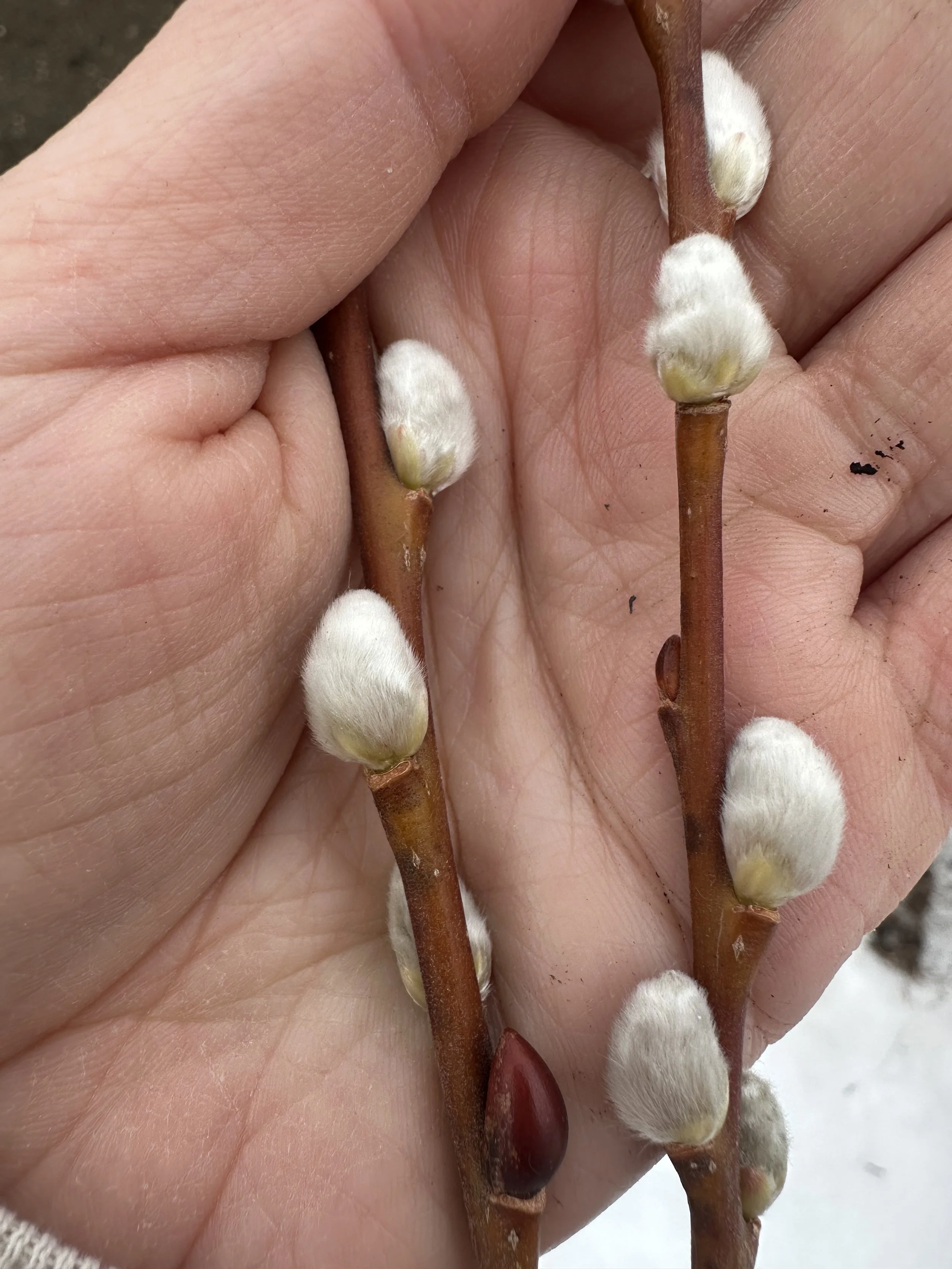
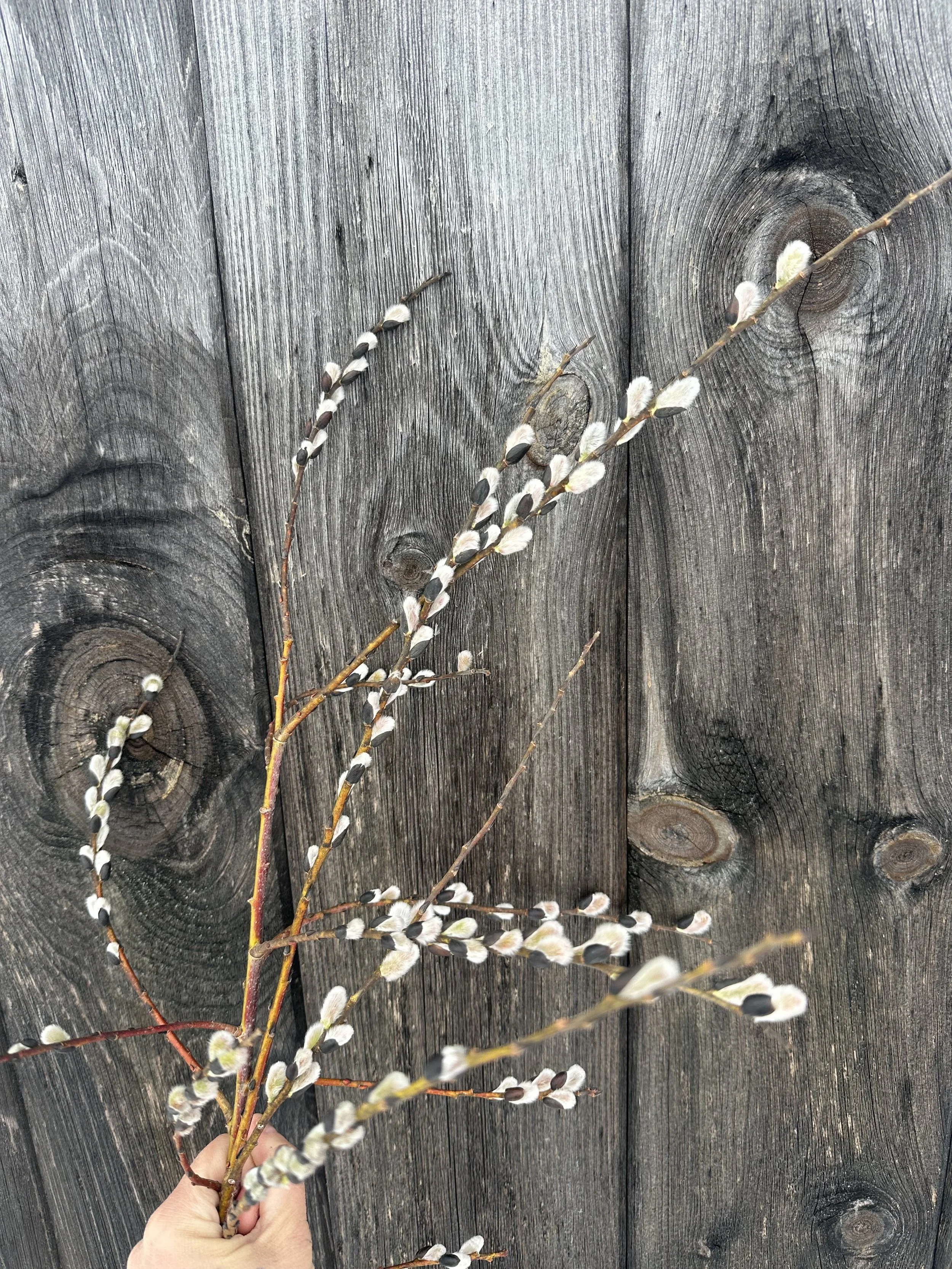
We love our pussy willows as an early fun texture to design with! These two varieties are quiet different from each other in growth habit and aesthetic, read the deets below.
Wild- We originally propagated these willows from the road side here in rural Maine. It has a more swooping branching growth habit. The scale covering of the catkin is black. It is the earliest blooming willow we grow so makes the best fit for early pollinator feed source.
Discolor- This has a more upright, consistent growth habit than the wild pussy willow making it easier to harvest pussy willow stems in mass. Scale covering of the catkin is brown. Plants are shorter than the wild pussy willow. Bark is auburn brown.
Prefers wet soils. May take up to 2 years to put on significant growth. Zone 3 and beyond. Sold in bundles of 5, 10” cuttings. Growing instructions come with your order.

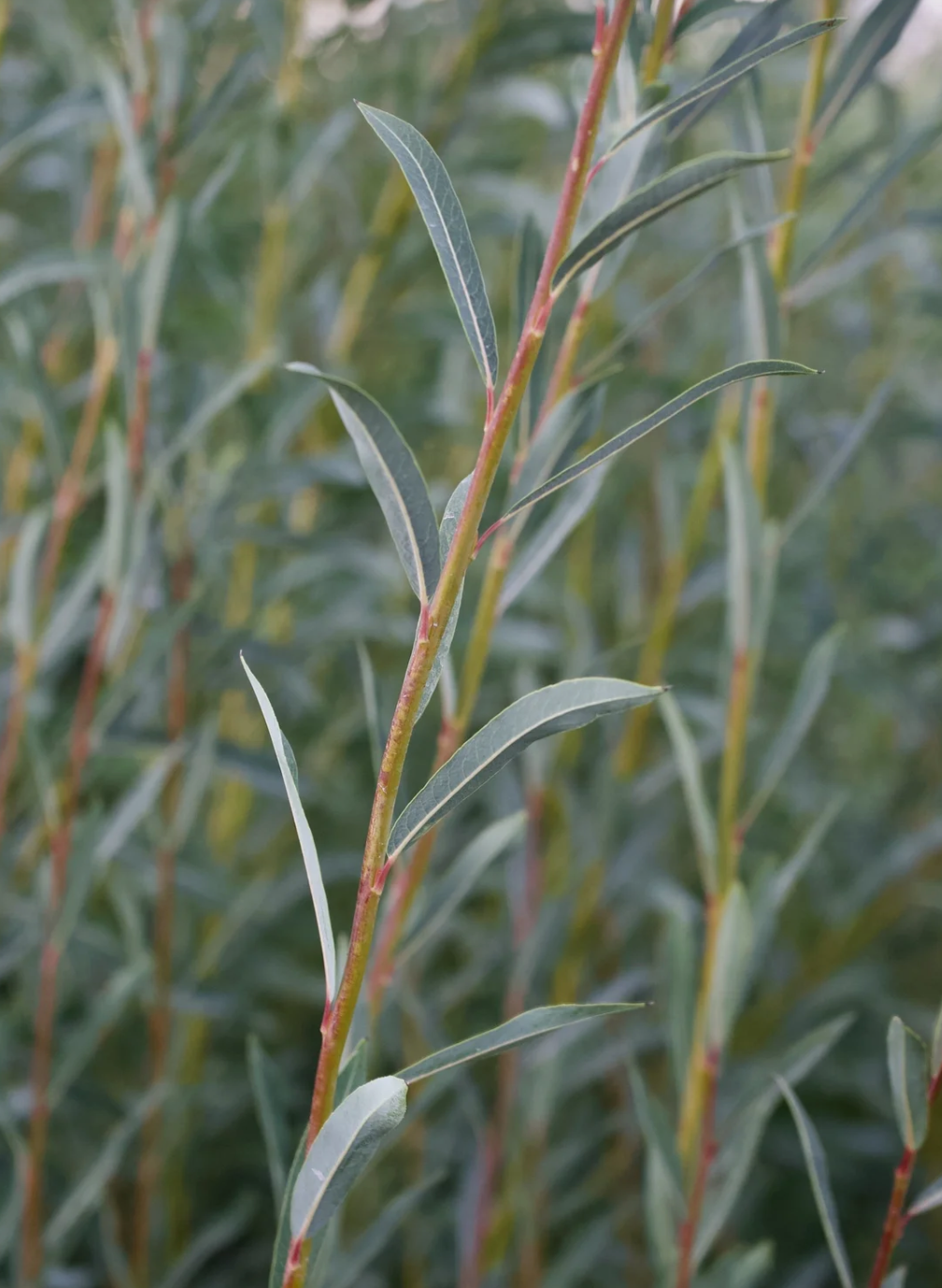
This variety of basket willow has long slender stems, growing around 6-8 feet a year when coppiced. While originally selected for basket making, this willow makes an elegant privacy fence. Upright growing habit with more delicate vibe than our other willows. The fresh stem is a mix of red and greenish hues. Prefers wet soils. Zone 3 and beyond. Sold in bundles of 5 10” cuttings. Growing instructions come with your order. Salix purpurea.

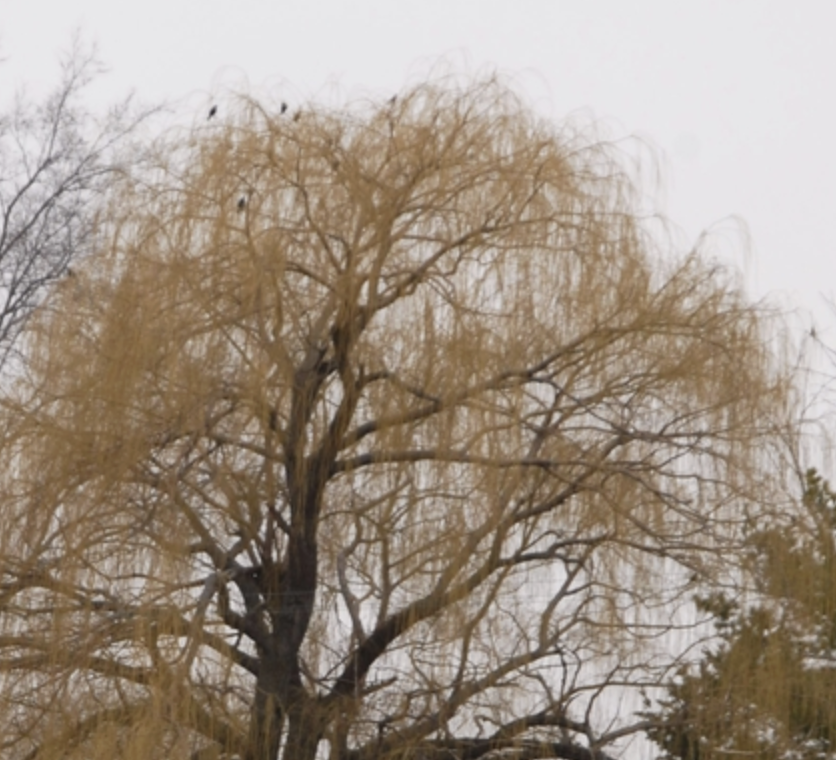
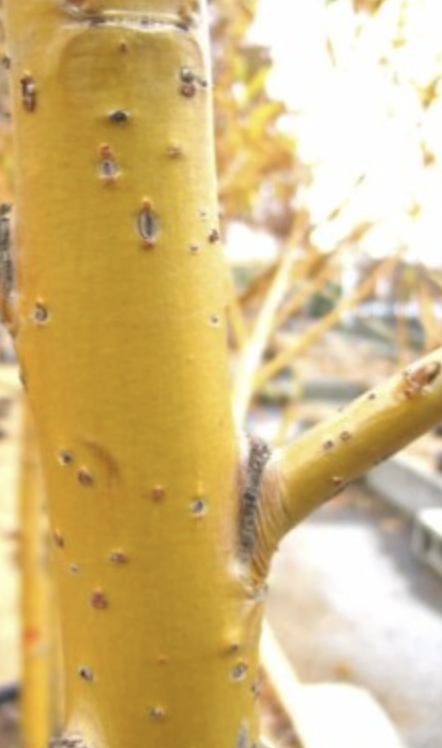
Known for its distinct golden bark, it can grow into the classic weeping willow shape if left to mature. This is our go to willow for building structural forms in the winter. Has beautiful look in the winter landscape as well. Prefers wet soils. Zone 3 and beyond. Sold in bundles of 5, 10” cuttings. Growing instructions come with your order. Salix pendulina.
Two Ways to Start Your Willow Cuttings!
1. In Potting Soil (Preferred Method):
Insert the willow cuttings 4–6 inches of each cutting into a pot filled with potting soil. You can place up to five cuttings in a 3-gallon pot. Water thoroughly to settle and firm the soil around the cuttings. Keep the pot in a warm location. Once the cuttings have leafed out and developed strong roots, transplant them to their permanent planting site.
2. Directly in the ground
As soon as the soil can be worked in spring, plant each cutting directly in its final location. Push the cutting about 6 inches into moist soil. Make sure the area stays consistently damp.
Important Growing Tips:
Plant your cuttings as soon as possible after receiving them.
If you cannot plant right away, place the cuttings in a glass of water to begin rooting.
Be sure to plant the end labeled “bottom” into the soil.
Willows prefer wet soil conditions.
Do not plant near buildings, water pipes, or septic systems, as willow roots can spread aggressively.